Blog Contents
- 1. Why HVAC Systems Fail During Summer Heatwaves
- 2. How to Prep Your Home Before the First Heatwave Hits
- 3. Warning Signs Your AC Is Struggling With Summer Heat
- 4. What Emergency HVAC Service Actually Costs
- 5. Should You Repair or Replace Your HVAC Before Summer?
- 6. Stay Ahead of the Heat
- 7. Ready to Get Your HVAC Summer-Ready?
- 8. Frequently Asked Questions
When the forecast starts showing temperatures in the mid-90s, your HVAC system is about to face its biggest test of the year. During a heatwave, your air conditioner works longer, harder, and more frequently than at any other time. If it’s not properly maintained, even a small underlying issue can quickly turn into an expensive breakdown.
The good news: most summer HVAC problems don’t happen overnight. They build up over time, giving homeowners plenty of chances to prevent them. With a little preparation before the hottest days arrive, you can keep your home comfortable, avoid emergency repairs, and cut unnecessary energy costs at the same time.
Here’s what to know before summer turns up the heat.
Why HVAC Systems Fail During Summer Heatwaves
Most homeowners assume their air conditioner will perform the same regardless of the weather. In reality, HVAC performance naturally declines during extreme heat because the system has to remove much more heat from your home than it does on a typical summer day.
A few factors quietly contribute to the failures we see spike during heatwaves:
Dirty air filters
Restricted airflow forces your system to work far harder than it should. A clogged filter can reduce efficiency, cause uneven cooling, and even lead to overheated components.
Dirty outdoor condenser
Leaves, grass clippings, dirt, and debris around the outdoor unit prevent it from releasing heat effectively. This is one of the most common reasons for an AC unit overheating in summer, and one of the easiest to prevent.
Low refrigerant
Refrigerant is what allows your system to transfer heat out of your home. If levels are low because of a leak, your AC may run continuously without cooling properly.
Aging components
Capacitors, contactors, and motors take on far more stress during prolonged operation. Heatwaves tend to expose parts that were already beginning to wear out, often the last straw for a component that would have failed later anyway.
If you’ve ever wondered why your AC seems to struggle in a heat wave, it’s usually because one or more of these issues has been quietly developing long before the temperature reached 95 degrees.
How to Prep Your Home Before the First Heatwave Hits
A little preparation before temperatures spike goes a long way. These are the simple, high-impact steps every homeowner should take heading into summer.
Replace your air filter
A clean filter improves airflow, helps your system breathe, and supports better cooling performance. It’s the single easiest thing you can do and one of the most consistently overlooked.
Clean around the outdoor unit
Keep at least two feet of clearance around your condenser. Remove weeds, branches, leaves, and anything else blocking airflow. If the unit is caked in dirt, gently rinse it with a garden hose.
Check your thermostat
Make sure your thermostat is reading temperatures accurately and following your preferred schedule. If it’s battery-powered, replace the batteries before peak season. A smart thermostat is worth considering if your current one is 10+ years old.
Seal air leaks
Cool air escaping through gaps around doors, windows, and attic hatches forces your HVAC system to run longer than it should. Sealing obvious leaks is a cheap, one-afternoon fix with real payoff.
Schedule professional maintenance
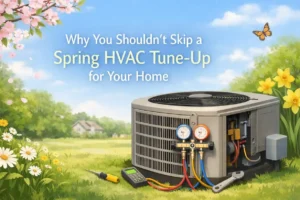
This is the step with the biggest long-term payoff. A spring HVAC tune-up lets a technician identify worn parts, clean critical components, and make adjustments before heavy summer demand kicks in — often catching problems that would have become emergency calls later.
Warning Signs Your AC Is Struggling With Summer Heat
Most air conditioners don’t just suddenly stop working. They give warning signs first. Pay attention if you notice any of the following:
- Warm air coming from the vents
- Weak or reduced airflow
- Unusual noises — grinding, rattling, or clicking
- Frequent cycling on and off (short cycling)
- Ice forming on refrigerant lines or on the indoor coil
- Rooms cooling unevenly across the house
- Higher-than-normal utility bills without a clear cause
Another common complaint during a heatwave is an air conditioner that can’t cool the house in 95-degree weather. Every HVAC system loses some efficiency during extreme heat, but your home should still stay reasonably comfortable. If indoor temperatures keep climbing despite the AC running constantly, it’s time for a professional inspection.
Small issues rarely fix themselves. They usually become bigger — and more expensive — repairs during peak summer demand. When symptoms show up, professional AC repair early in the season is almost always cheaper than a mid-heatwave breakdown.
What Emergency HVAC Service Actually Costs
No homeowner wants to think about emergency HVAC repairs, but understanding the costs makes it very clear why prevention matters.
Emergency service typically involves:
- After-hours diagnostic fees
- Premium labor rates
- Expedited parts ordering when standard shipping isn’t fast enough
- Temporary cooling solutions if replacement parts are delayed
- Longer wait times, because everyone in your neighborhood is calling at the same time
Because HVAC companies receive the highest volume of calls during heatwaves, emergency HVAC service can involve longer wait times even when the technicians are working around the clock.
Repair costs vary depending on the issue, but they almost always exceed the cost of routine maintenance. A failed compressor, for example, can be one of the most expensive HVAC repairs a homeowner ever faces. Planning ahead is almost always cheaper than reacting during an emergency.
Should You Repair or Replace Your HVAC Before Summer?
Preventative maintenance remains one of the smartest investments homeowners can make. During a professional tune-up, technicians inspect electrical components, clean coils, verify refrigerant levels, test system performance, and confirm everything is operating safely. These inspections catch worn parts before they fail under heavy summer demand.
Maintenance also improves HVAC efficiency in high temperatures, allowing your system to cool more effectively while using less energy.
That said, some homeowners eventually reach the point where maintenance alone isn’t enough. It’s usually worth considering replacement if any of these apply:
- Your equipment is 15+ years old
- You’ve needed repairs multiple summers in a row
- The system struggles to hold comfortable temperatures every summer
- Utility bills keep climbing despite no changes in usage
- Repair estimates are approaching a meaningful percentage of replacement cost
Replacing equipment before peak season typically means better pricing, easier scheduling, and a less stressful installation than mid-summer emergency work. For homeowners weighing the timing, financing options can help make a planned replacement more manageable, and the total cost is usually lower than an unplanned repair-and-replace cycle during a heatwave.
A professional inspection helps determine whether maintenance, targeted repair, or replacement is the best long-term investment for your home.
Stay Ahead of the Heat
Heatwaves are tough on every air conditioner. They don’t have to end with an emergency repair.
Preparing early, paying attention to warning signs, and investing in preventative maintenance dramatically improves your system’s reliability when you need it most. Instead of waiting until your house feels like an oven, make sure your HVAC system is ready before the next stretch of 95-degree days arrives.
Your future self, and your energy bill, will thank you.
Ready to Get Your HVAC Summer-Ready?
Don’t wait until the hottest day of the year to find out your HVAC system isn’t ready. Schedule a professional tune-up with B&H today and keep your home comfortable all summer long.
Frequently Asked Questions
Q1: Is it normal for my AC to run all day during a heatwave?
Ans: Yes. During extreme heat, air conditioners often run much longer to maintain indoor temperatures, especially through the afternoon. That’s a sign the system is working — not a sign of a problem — unless indoor temperatures keep climbing while it runs.
Q2: What indoor temperature should I expect when it’s over 95°F outside?
Ans: A properly functioning system should hold a comfortable indoor temperature, though it may take longer to cool back down after doors have been open or heat has built up in the house. If your AC can’t get within 20 degrees of the outdoor temperature under any conditions, it likely needs service.
Q3: Can closing vents in unused rooms improve cooling?
Ans: Usually not. Closing vents disrupts airflow and can actually put extra strain on your HVAC system, sometimes triggering short cycling or pressure issues. Modern systems are engineered around balanced airflow across the whole home.
Q4: Do ceiling fans reduce the workload on my AC?
Ans: Yes. Ceiling fans help circulate cool air and make occupants feel comfortable at slightly higher thermostat settings, which reduces the total load on your AC. Just remember to turn them off when you leave a room — fans cool people, not spaces.
Q5: How early should I schedule summer HVAC maintenance?
Ans: Ideally in early spring, before temperatures rise and appointment availability tightens. By the time the first heatwave hits, most HVAC companies are booking well over a week out — and same-week service becomes rare.